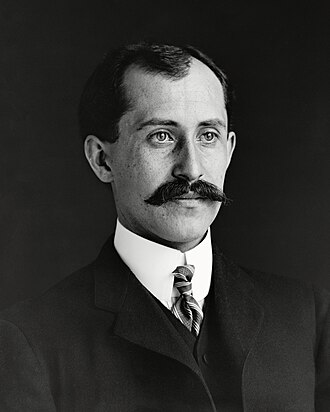
First flight: 17 December 1903, Kitty Hawk | Known for: First powered flight, wind tunnel testing | Famous words (Orville): “If we all worked on the assumption that what is accepted as true is really true, there would be little hope of advance.”
The Toy That Started It
Wilbur (born 1867) and Orville Wright (born 1871) grew up in Dayton, Ohio, USA. One day their father brought home a small toy helicopter powered by a rubber band. The brothers played with it until it broke — then built their own copies. Neither finished college; they opened a print shop, then a bicycle repair shop. Bicycles taught them the secret the 'experts' missed: flying, like cycling, would be about balance and control, not just power.
Solving the Impossible
While famous scientists with government money failed spectacularly, the brothers worked methodically on their own savings. They built a wind tunnel out of a wooden box and tested over 200 wing shapes, correcting the published data everyone else trusted — it was wrong. Watching buzzards soar, they invented 'wing warping' — twisting wings to bank and steer — the ancestor of every aileron on every plane today.
Twelve Seconds That Changed the World
On 17 December 1903, at windy Kitty Hawk, North Carolina, Orville lay across the lower wing of their Flyer and lifted off: 12 seconds, 37 metres — the first controlled, powered flight in human history. Only five people watched. By the fourth flight that morning, Wilbur flew 260 metres. When they later flew circles over Paris and New York, the world finally believed: the age of the airplane had begun, and it was born in a bicycle shop.
What We Can Learn
- No degree, no funding, no permission needed — method beats money.
- Check the 'expert' data yourself; theirs was wrong, and the sky proved it.
- Master control before power — in machines and in life.