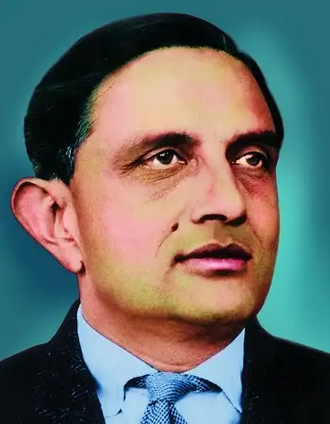
Born: 12 August 1919, Ahmedabad | Known for: Founding ISRO, IIM-A, PRL | Famous words: “We must be second to none in the application of advanced technologies to the real problems of man and society.”
Early Life
Vikram Sarabhai was born on 12 August 1919 in Ahmedabad, into a wealthy industrialist family whose home hosted Gandhi, Tagore, and Nehru. Educated at Cambridge, he returned to an India winning its freedom, and asked one question: what could science do for a poor nation? His answer would reach space.
Why Should India Go to Space?
When critics mocked a poor country dreaming of rockets, Sarabhai's reply became immortal: India didn't dream of competing with rich nations in exploring the moon — but to be 'second to none in the application of advanced technologies to the real problems of man and society.' Satellites, he argued, could teach in village classrooms, forecast cyclones, and find water — space as a tool of development, not prestige.
From a Church to the Cosmos
In 1963, India's first rocket launched from Thumba, a fishing village in Kerala — the local church became the workshop, the bishop's house the office, and scientists carried rocket parts on bicycles and bullock carts. From these humble beginnings Sarabhai built ISRO (founded 1969). He mentored a young A.P.J. Abdul Kalam, planned the SITE programme that beamed education to 2,400 villages, and laid the blueprint for the satellites and launch vehicles that would one day take India to the Moon and Mars.
The Institution Builder
Sarabhai founded or nurtured an astonishing number of institutions — the Physical Research Laboratory, IIM Ahmedabad, and many more — while also chairing the Atomic Energy Commission after Bhabha's death. He died suddenly in his sleep in 1971, aged just 52. India's first lunar lander site is named 'Statio Vikram' and its Chandrayaan landers carry the 'Vikram' name — his signature, written on the Moon.
What We Can Learn
- Purpose beats prestige — aim technology at people's real problems.
- Start with what you have: bicycles carried India's first rockets.
- Mentor greatness — his student Kalam became the Missile Man and President.