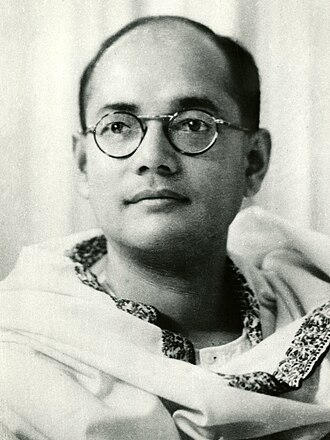
Born: 23 January 1897, Cuttack | Known for: INA, 'Jai Hind', the Great Escape | Famous words: “Give me blood, and I will give you freedom!”
Early Life
Subhas Chandra Bose was born on 23 January 1897 in Cuttack, Odisha, one of fourteen children. He was brilliant — he passed the Indian Civil Services exam in England, one of the toughest in the world, standing fourth. A guaranteed life of British-paid luxury waited for him. He resigned. He could not serve the very government that was ruling his country by force.
The Rebel in Congress
Bose joined the freedom movement and was jailed eleven times. He respected Gandhi deeply but disagreed with him on method — Bose believed freedom would need force, not only non-violence. He was elected Congress President twice, but differences with Gandhi's group made him resign and walk his own path. The British put him under house arrest in Kolkata in 1940. What happened next became legend.
The Great Escape and the INA
In January 1941, Bose disguised himself as a Pathan, slipped past the watching police, and escaped India — travelling secretly through Afghanistan and the Soviet Union to Germany, and then by submarine around the world to Japan. In Southeast Asia he rebuilt the Indian National Army (INA) from Indian prisoners of war — including a women's regiment named after Rani Lakshmibai, decades ahead of its time. His army marched under the slogan 'Chalo Dilli' (March to Delhi) and reached Indian soil in the northeast before the tide of war turned. He gave India its greeting 'Jai Hind' and the immortal call: 'Give me blood, and I will give you freedom.'
The Mystery
In August 1945, it was reported that Netaji died in a plane crash in Taiwan. Many Indians never fully accepted this, and his death remains one of India's most debated mysteries. What no one debates is his impact — the INA trials in Delhi lit such fire among Indians, including in the British Indian armed forces, that historians say they hastened the British decision to leave India.
What We Can Learn
- Comfort is not the goal — Bose gave up the empire's best job to fight the empire.
- If one door closes, escape through another: house arrest became a journey across the world.
- Courage is contagious — one fearless person can awaken millions.