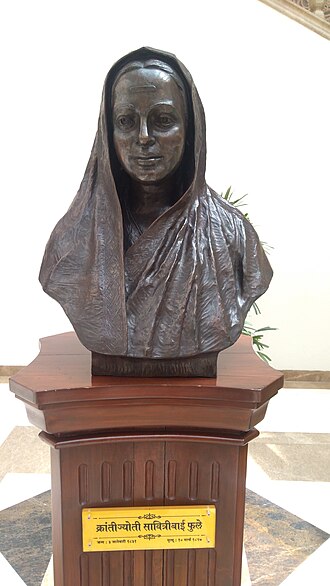
Born: 3 January 1831, Naigaon | Known for: India's first woman teacher, girls' schools | Famous words: “Awake, arise and educate. Smash traditions — liberate!”
Early Life
Savitribai was born on 3 January 1831 in Naigaon, Maharashtra, at a time when educating girls was considered a sin by much of society. Married at nine to thirteen-year-old Jyotirao Phule, she could not read or write. Her husband did something revolutionary for that era — he taught her at home. She then trained formally as a teacher, becoming India's first woman teacher.
The School That Changed India
In 1848, Savitribai and Jyotirao opened a school for girls in Pune — one of India's first. Society's reaction was vicious. As she walked to school, people threw stones, mud, and cow dung at her. Her answer was breathtakingly practical: she carried a second sari in her bag, changed at school, and taught. Every insult on the road ended in a lesson in the classroom. The couple went on to open 18 schools, and were thrown out of their own family home for it.
Beyond the Classroom
The Phules fought every cruelty of their time. They opened their own well to people society called 'untouchable'. They started a home to protect widows and their children, and Savitribai raised an abandoned widow's son as her own — later adopting him; he became a doctor. She organised barbers to strike against the cruel custom of shaving widows' heads. She wrote poetry urging the oppressed to educate themselves and break their chains — India's first modern woman poet of protest.
Her Last Act of Service
In 1897, plague swept Pune. Savitribai, then 66, ran a clinic with her son for patients everyone else abandoned. Carrying a sick child to the clinic on her back, she caught the plague herself and died serving — a teacher to the very end. Her birthday, 3 January, is celebrated in Maharashtra as Balika Din (Girl Child Day), and teachers across India honour her as their pioneer.
What We Can Learn
- Education is the first freedom — everything else follows it.
- Answer insults with results: keep a spare sari, keep teaching.
- Lift as you climb — every door she opened, she held open for others.