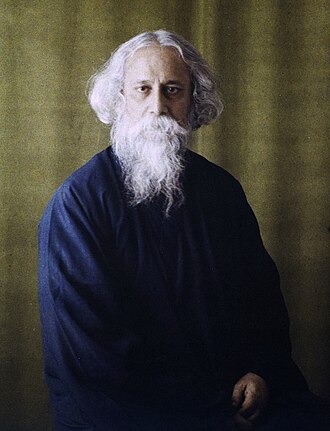
Born: 7 May 1861, Kolkata | Known for: First Asian Nobel (1913), two national anthems, Shantiniketan | Famous words: “You can't cross the sea merely by standing and staring at the water.”
Early Life
Rabindranath Tagore was born on 7 May 1861 in Kolkata, the youngest of thirteen children in a family bursting with artists and thinkers. He hated the four walls of school and dropped out — nature was his classroom, and he wrote his first poem at age eight. What schools could not teach him, he taught himself, growing into a poet, storyteller, painter, and philosopher all in one.
The Nobel Prize
In 1913, Tagore became the first Asian ever to win a Nobel Prize, for his collection of poems 'Gitanjali' (Song Offerings). Poems he had written in Bengali and translated on a sea voyage to England moved the world's greatest writers to tears. Overnight, the West realised the East had voices of genius.
Two Anthems, One Knighthood Returned
Tagore wrote the words and music of India's national anthem, 'Jana Gana Mana' — and his song 'Amar Shonar Bangla' became Bangladesh's national anthem. No other person in history has authored the anthems of two nations. When the British massacred innocents at Jallianwala Bagh in 1919, Tagore returned his knighthood in protest, writing that such honours 'shame me by their glare of infamy.'
Shantiniketan
His deepest dream was a school without walls — where children learn under open sky, through art, music, and curiosity instead of fear. He built it at Shantiniketan ('abode of peace'), which grew into Visva-Bharati University, attracting students and teachers from around the world. Indira Gandhi and Amartya Sen both studied there.
What We Can Learn
- Formal school is not the only path — curiosity educates deeper than fear.
- Art can carry a nation's soul: one man's songs became two countries' anthems.
- Honours mean nothing beside conscience — return them if they demand silence.