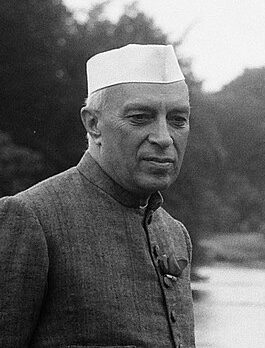
Born: 14 November 1889, Allahabad | Known for: First PM of India, IITs, Children's Day | Famous words: “At the stroke of the midnight hour, when the world sleeps, India will awake to life and freedom.”
Early Life
Jawaharlal Nehru was born on 14 November 1889 in Allahabad, into a wealthy family. His father Motilal was a famous lawyer. Jawaharlal studied in England at Harrow and Cambridge, and could have lived a life of pure comfort. Instead, when he returned to India and met Gandhi, everything changed — he gave up his English suits for khadi and jumped into the freedom struggle with his whole heart.
The Freedom Fighter
Nehru spent almost nine years of his life in British jails — and used the time to write books. From prison he wrote letters to his young daughter Indira, teaching her world history; those letters became the famous book 'Glimpses of World History'. He also wrote 'The Discovery of India', exploring what makes India, India. On the midnight of 14–15 August 1947, it was Nehru who gave free India's first speech — 'Tryst with Destiny' — one of the great speeches of the century.
Building the New Nation
As India's first Prime Minister for 17 years, Nehru laid foundation stones everywhere: the IITs for engineering, AIIMS for medicine, dams and steel plants he called the 'temples of modern India', and the space and atomic energy programmes. He insisted India would be a democracy — every adult could vote from day one, something even America and Britain took centuries to achieve. He kept India friendly with all countries but servant to none, calling it non-alignment.
The Children's Chacha
Nehru loved children and children loved him back — they called him Chacha Nehru (Uncle Nehru). He always wore a red rose on his jacket. His birthday, 14 November, is celebrated across India as Children's Day. He believed children were the real wealth of the nation: build them, and you build India.
What We Can Learn
- Privilege is a responsibility — Nehru traded a comfortable life for a jail cell and a mission.
- Use every situation: he turned prison years into books that educated a nation.
- Build institutions, not monuments — things that keep working after you are gone.