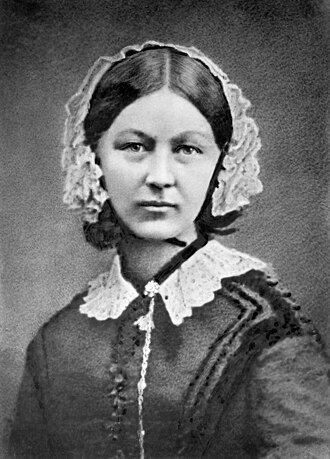
Born: 12 May 1820, Florence | Known for: Modern nursing, hospital hygiene, medical statistics | Famous words: “I attribute my success to this — I never gave or took any excuse.”
The Rebel Daughter
Florence Nightingale was born on 12 May 1820 into a wealthy English family, in Florence, Italy — hence her name. Rich Victorian daughters were meant to marry well and host parties; Florence instead felt a calling to nursing — then considered lowly, dirty work. Her horrified family refused for years. She studied hospital reports and statistics secretly by candlelight, and finally, at 30, won her freedom.
The Lamp in the Darkness
In 1854, Britain's soldiers were dying not from Crimean War wounds but from the filthy military hospital at Scutari — cholera and typhus killed ten times more than battle. Florence led 38 nurses there. She scrubbed, organised kitchens and laundries, opened windows, dug out drains, and walked the wards at night with her lamp, comforting the wounded — soldiers kissed her shadow as she passed, calling her the Lady with the Lamp. The death rate collapsed from around 42% to about 2%.
The Passionate Statistician
Her real revolution came after the war. Nightingale proved with data what compassion alone couldn't: she invented striking pie-style charts ('rose diagrams') showing deaths from filth versus battle, so generals and politicians could not look away. Reforms followed across the British army and empire. In 1860 she founded the Nightingale Training School — modern nursing's birthplace — and her book 'Notes on Nursing' taught the world that clean hands, air, and water save lives. She became the first woman elected to the Royal Statistical Society.
What We Can Learn
- A 'respectable' life you don't want is still the wrong life — follow the calling.
- Compassion opens the door; data wins the argument.
- Fix the system, not just the symptom — hygiene beat heroics.