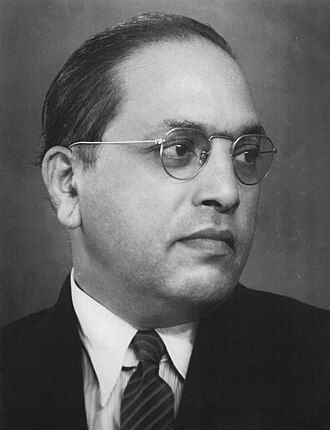
Born: 14 April 1891, Mhow | Known for: Indian Constitution, social equality | Famous words: “Cultivation of mind should be the ultimate aim of human existence.”
Early Life
Bhimrao Ramji Ambedkar was born on 14 April 1891 in Mhow, Madhya Pradesh. His family belonged to a community that society then cruelly called 'untouchable.' In school, little Bhim had to sit outside the classroom on a gunny sack he carried himself. He could not touch the water tap — a peon would pour water into his mouth from above, and if the peon was absent, he stayed thirsty all day.
The Fight for Education
Instead of breaking him, this unfairness lit a fire in him. He studied under street lamps, earned scholarships, and became one of the most educated Indians of his time — with doctorates from Columbia University in America and the London School of Economics. Books were his weapons, and his personal library grew to over 50,000 of them.
Building Modern India
Ambedkar spent his life fighting for equality — for Dalits, for workers, and for women. When India became free, he was chosen as the chairman of the committee that wrote our Constitution — the rulebook of the nation. He put equality at its very heart: one person, one vote, one value, no matter their caste, religion, or gender. He is rightly called the Father of the Indian Constitution.
Beyond the Constitution
Ambedkar was far more than a lawmaker. He was a brilliant economist — his ideas helped shape the Reserve Bank of India. He fought for women's rights decades before it was common, pushing laws for equal inheritance and marriage rights. He started newspapers to give a voice to the voiceless. And in his final year, 1956, he made one last powerful choice: along with half a million followers, he embraced Buddhism, a religion of equality and peace. His statue with the Constitution in hand stands in villages across India — often the first statue a child in rural India ever sees.
What We Can Learn
- Education is the most powerful ladder — it can lift a person from the last row of society to writing the nation's rulebook.
- Fight injustice with knowledge and law, not anger alone.
- His three-word formula for progress: Educate, Agitate, Organise.