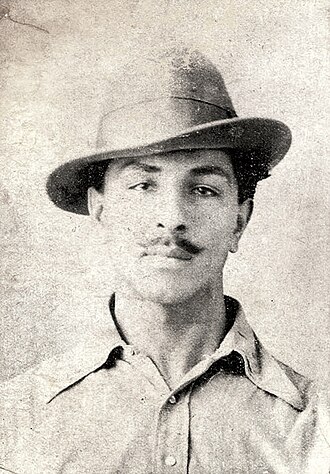
Born: 28 September 1907, Banga, Punjab | Known for: Inquilab Zindabad, supreme sacrifice at 23 | Famous words: “They may kill me, but they cannot kill my ideas.”
Early Life
Bhagat Singh was born on 28 September 1907 in Punjab, into a family of freedom fighters. When he was 12, the Jallianwala Bagh massacre happened — British troops shot hundreds of unarmed Indians in a walled garden in Amritsar. Young Bhagat visited the spot and carried home a bottle of soil soaked in blood. That bottle shaped his life.
The Young Revolutionary
Bhagat Singh was not just brave — he was brilliantly well-read. He devoured books on revolutions, economics, and justice, and wrote powerful essays as a teenager. He believed the British didn't just need to leave; India also had to end poverty and inequality. When the respected leader Lala Lajpat Rai died after a police lathi charge, Bhagat Singh and his comrades decided the empire must be answered.
The Assembly Bombing
In April 1929, Bhagat Singh and Batukeshwar Dutt threw two bombs in the Central Legislative Assembly in Delhi — deliberately designed to harm no one, thrown at empty benches. They stayed put, shouting 'Inquilab Zindabad!' (Long live the revolution!) and let themselves be arrested. Their goal, in their own words: 'to make the deaf hear.' They wanted a courtroom to broadcast their message to the nation — and it worked. In jail, he led a 116-day hunger strike for prisoners' rights.
The Gallows
For an earlier case, Bhagat Singh, Rajguru, and Sukhdev were sentenced to death. Across India, millions begged for mercy petitions; he refused to ask for one. On 23 March 1931, aged just 23, he walked to the gallows — reading a book on revolution until minutes before, kissing the noose, dying with a smile. The date is remembered every year as Shaheed Diwas, Martyrs' Day.
What We Can Learn
- Read before you act — Bhagat Singh's power came from ideas, not just courage.
- Stand by your convictions even at the highest price.
- Youth is not too early to matter — he changed history before turning 24.